
I have an extremely soft spot for very early works of English literature. The ones that require modern English translations and make Shakespeare look downright colloquial. A period of time during which poetry was literature, it was entertainment, it was everything. As the craft of poetry seemingly wanes in the modern era, these epic poems will always have a place in my heart and resonate with my sense of self, from Beowulf written around 975 in old English to Sir Gawain and the Green Knight written in the 1400’s in Middle English.
I particularly resonate with The Sir Gawain Poet, also known as the Pearl Poet. Sir Gawain and the Green Knight is one of the best known Arthurian tales. The plot combines the familiar motifs of the age: the beheading game and the winnings exchange. Sir Gawain and the Green Knight is a typical chivalric romance.
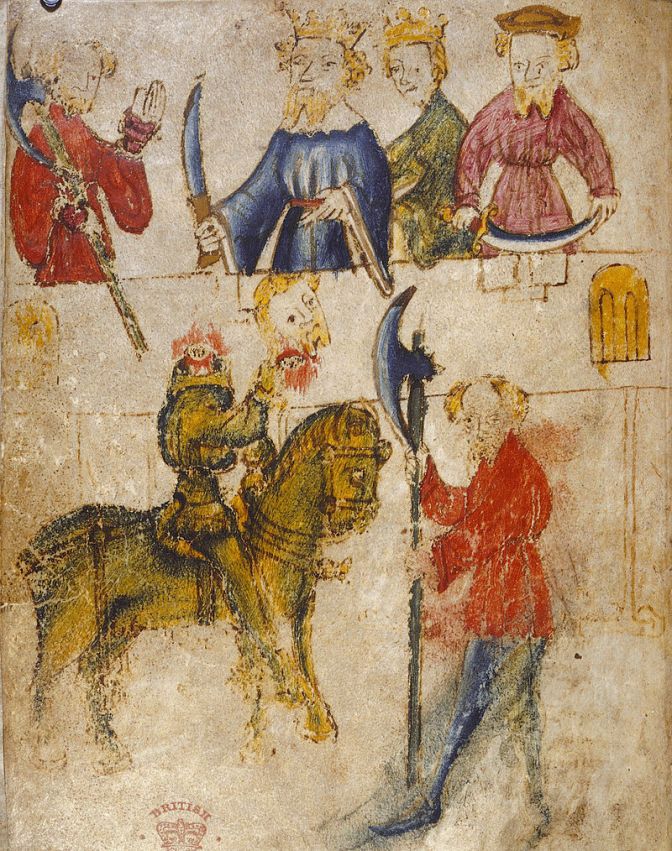
My favorite interruption is the one translated by J.R.R Tolkien. Sir Gawain is a knight of King Arthur’s Round Table, and he accepts a challenge from the Green Knight when he randomly shows up during the Court’s Yule celebration. The Green Knight then challenges any knight to strike him and take a return blow in a year and a day.
Gawain steps up to the challenge and beheads the Green Knight. Rather than dying the Green Knight picks up his head and reminds Sir Gawain that he must meet his blow in a year and a day, before leaving as mysteriously as he came. The poem survives in a single manuscript, the Cotton Nero A.x. This text also includes the poems: Pearl, Purity, and Patience.
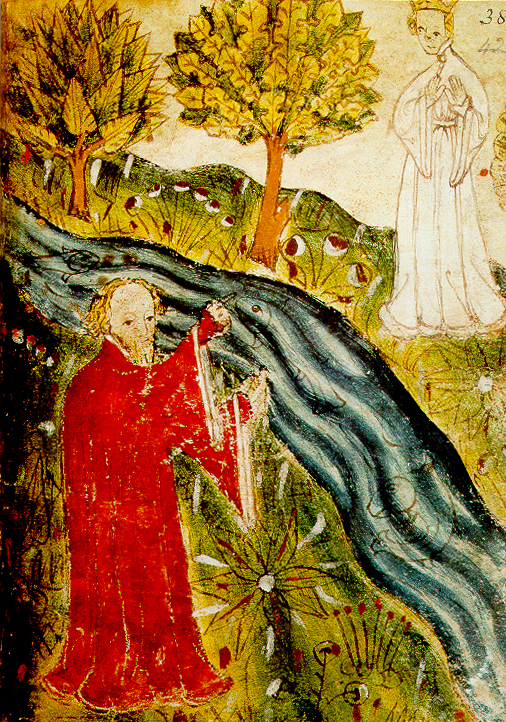
The poem that really strikes me by this anonymous poet is Pearl. There is a lot of argument over what Pearl is actually about, to me, I think it is clear that it is about the death of a child and the pain and torment that go with it. However, many scholars dismiss this as too simplistic and try to paint it as more of an allegory. While it is clear to me the religious influence that was present in most writings of the time, I feel that calling it an allegory is actually being dismissive as the very soul of the poem. Anyone who has lost someone close to them can identify with the devastation that the poet is going through. Yes, the poem may hold some allegory about the afterlife, but that does not mean it is not also an elegy. If interested you can check out Tolkien’s beautiful translation of Pearl for free here.
Admittedly when I first read Pearl my best friend and first love had just died unexpectedly. It is a death that profoundly changed my life, it felt as though my soul was torn asunder by a nameless, faceless demon. Nearly 10 years later I am still dealing with the vestiges of how her death affected me. In my grief and partially spurred on by an assignment for my English class at the time, I wrote my own poetic response to the Pearl with my dearly departed in mind, it has always gotten great responses when I have read it out loud.
Lavender Beam
Standing in deep lamenting thought
Over her blacken grave, surrounded by green.
Deep underneath and far away from me.
My light, my beam
Find comfort in her peace and release from pain
I beseech my willful brain.
Falling deep into vexacteing grief,
I slip into deep sleep and lucid dream
I awaken upon a meadow rich and sweet
In deep night, though almost day through the luminous moon.
Not long had a wondered to hence I had come,
That I saw her image standing across a silvery stream,
Whose light was more radiant than the fiery sun.
Closer in blood and closer in soul
Than any I have dared to know.
She saw me across the shore and
gave a comforting welcome.
Overcome with joy and confusion I began to say:
“How are you here in this wondrous place,
Surrounded by the stars, stream, and moon.
When far away from me you were taken,
All cognition lost, all memories forsaken?
Since you were ripped from my heart and my soul
I have been a huddle of despondency.”
She then replied in gravity:
“Be not pained nor troubled
By my departure, it is but temporary,
Though our time together was short.
Do not lament when here I now dwell
Forever happy and free from pain.”
“But luminous one” I did reply
“I am now comforted by your sight,
Now my mind can be at ease.
I thought of you deep in the ground
Surrounded by darkness and maggoty decay,
And away from me forever.
Now I see you here in this beautiful place.
I am here to dwell in your presence.”
“Trust not your eyes, sir, but your soul.
Know that forever intertwined we are,
Again someday, but not soon,
We shall again dwell together,
Not on Earth, but here in this place
Of flowers and silvery streams.
But not now, your time on earth has not yet been spent.
You were brought here to avail your woes
And be shown your errors
Yearn not for the old life for me.
Be comforted in my presence here,
And the knowledge in your heart, not eyes
That life again we live after
the flesh as failed and breath is gone
Though you may not linger long.
Dwell not on your sorrow, for it will lead you wrong.”
“But fair beam why must all my comfort now be forsaken?
Why now must I be ripped from you again?
A loss, a mourn, doubly so now that I have seen you
Chastise me not.
Must I forever live until death in bereavement’s cage?”
“Sir again you know not what you speak.
Your grief clouds your thoughts
And beguiles your brain.
Do not let temporal agony hold
You under such deep restrain,
For then you will never be able to
Avail your pain.”
Unable to control my overwhelming desires,
I plunged into the stream,
desperate to cross,
Desperate to hold my luminous beam.
Quickly with crashing and a racing heart,
We again are torn apart.
I awoke upon her earthen plot,
Under the moon, not as luminous, but no less sweet.
Willed myself to take comfort in this moonbeam.
In this luminous dream.

 Chestnut Cowboy